
5 Signs of Chronic Inflammation You Don’t Know You Have — And What Your Elemental Type Reveals About Which Ones Are Yours
Chronic inflammation rarely announces itself. It whispers through your energy, sleep, digestion, mood, and stress response — and your elemental type reveals where it tends to show up first.
Lorna walked into my clinic in the middle of August. Fiery red hair. A linen shirt with the sleeves pushed up because the heat was making her skin crawl.
She had hives. Not the occasional kind — the kind that arrived every June and stayed through September, year after year, for a decade. She’d seen dermatologists, allergists, and immunologists. She’d done elimination diets, tried antihistamines, topical creams, ice packs. Nothing gave her more than temporary relief.
“I’ve just accepted this is how summers go for me now,” she said.
I looked at her — her coloring, her build, the way she spoke quickly and with intensity, the fact that she’d driven 45 minutes to get here and had a second appointment scheduled for that same afternoon — and I knew before she finished her sentence.
Lorna was Pitta.
The question I asked was simple: what does your diet look like in summer compared to winter? More grilling. More tomatoes, peppers, citrus. All of them, in Ayurveda, Pitta-aggravating. We made three changes. Her hives were gone within a week. She still sends me a message every September.

This is the thing about chronic inflammation that medicine keeps missing: it doesn’t have one fixed address. It moves through the body’s systems and expresses itself through whatever pathway offers the least resistance. And that pathway is largely determined by your elemental type.
First: what chronic inflammation actually is (and why your labs probably missed it)
Acute inflammation is visible — swelling after an injury, redness around a wound. Your body dispatches immune cells to protect against a threat. When the threat is gone, the inflammation resolves.
Chronic inflammation is different. It’s a low, constant fire burning inside your cells, your gut lining, your brain tissue, your vascular walls. It has no obvious symptoms of its own. It just slowly degrades every system it touches — and eventually becomes something medicine gives a different name. Heart disease. Arthritis. Autoimmune conditions. Dementia. Cancer.
Three out of five people worldwide die from chronic inflammatory disease. But the inflammation that set the stage was present years, sometimes decades, before the diagnosis.
Standard lab panels aren’t designed to catch low-grade chronic inflammation early. By the time your CRP, or C-reactive protein, is flagged as elevated, the fire has usually been burning for a long time. Most people get told their labs are normal and sent home with their symptoms intact.
Ayurveda has been mapping this for five thousand years. Not with blood tests — but with a framework for understanding which body types carry inflammation in which systems, how it accumulates, what triggers it, and how to interrupt it before it declares itself as disease.
Your elemental type is the key to reading your own pattern.
New here? Your elemental type — Vata, Pitta, or Kapha — is your body’s operating system. It determines how you process food, handle stress, sleep, and yes, carry inflammation. If you don’t know yours yet, take the Elemental Design Quiz before reading on. Everything below will make more sense.
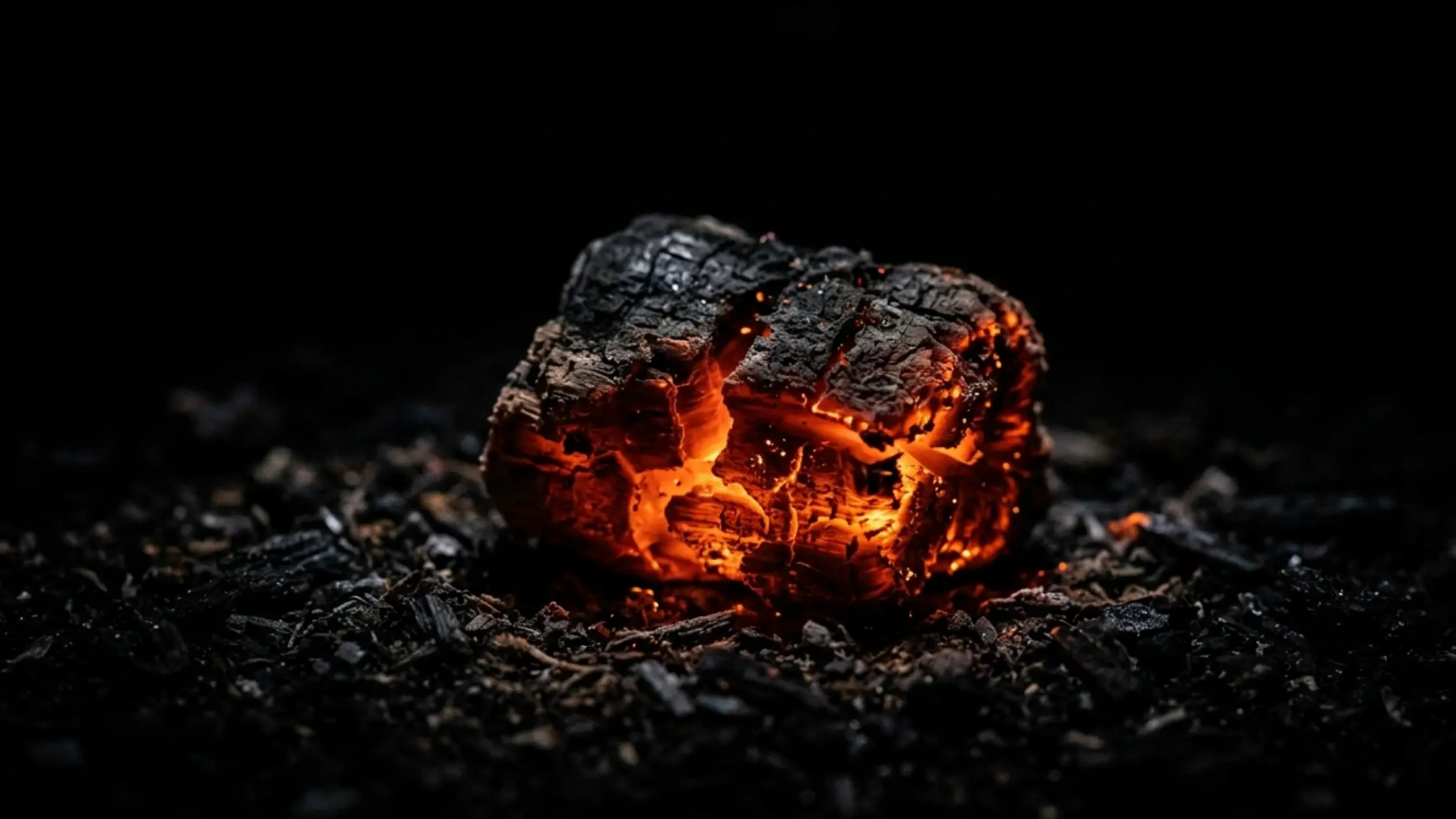
Chronic inflammation is not a fire that announces itself. It smolders — quietly, persistently — until something finally breaks.
The 5 signs of chronic inflammation — and how each type carries them
These are not the obvious signs. These are the ones that have been present for months or years — the ones you’ve normalized, or been told are just your personality, or are just aging, or are just stress.
They are not. They are your body’s inflammation speaking in the language of your element.
You feel fine — sometimes even good — and then suddenly you don’t. The crash isn’t tied to sleep or food in any obvious way. You feel like your battery drops from 80% to 5% without warning. You push through, you recover, and then it happens again.
Most people attribute this to stress, thyroid issues, or “just being tired.” In Ayurveda, unpredictable energy depletion is one of the earliest signs of inflammation burdening the ojas — your body’s deep vitality reserves. When chronic inflammation is running in the background, it consumes energy that should be available for your day.
If you’re Vata
Your crashes are airy and scattered — linked to nervous system over-activation, irregular digestion, and sleep that doesn’t fully restore. Vata inflammation depletes ojas fastest because the nervous system is always drawing on reserves it isn’t rebuilding.
If you’re Pitta
Your crashes are intense and sudden — often after periods of high output. Pitta burns bright and hot, and when the inflammation load exceeds the system’s capacity, the crash is sharp. You may also notice irritability just before the crash arrives.
If you’re Kapha
Your crashes are heavy and prolonged — less like falling off a cliff and more like sinking into mud. Kapha inflammation accumulates slowly and the energy depletion follows the same pattern: gradual, resistant to rest, and stubborn.
The Science: Research consistently shows elevated pro-inflammatory cytokines in patients with unexplained fatigue, even when CRP appears normal. Ayurveda’s ojas concept maps closely to what modern science now calls mitochondrial function and immune resilience.
You sleep — sometimes a full eight hours — and wake up tired. Or you fall asleep easily but wake at a specific time, often between 1 and 4am, and lie there with a mind that won’t slow down. Or you sleep deeply but can’t seem to get enough of it.
Sleep is not just rest. It is the primary window during which your body does its inflammatory repair work. When chronic inflammation is active, sleep architecture is disrupted — the deep, slow-wave phases that govern immune regulation become shorter or less effective. The result is that you sleep but the repair doesn’t happen.
If you’re Vata
Vata sleep disruption is the classic “racing mind at 2am.” You wake in the Vata hours, your nervous system activated, your thoughts running fast. The inflammation in your nervous system is the driver — not anxiety, though it can feel identical.
If you’re Pitta
Pitta sleep disruption is heat-driven. You wake between 1 and 3am — the Pitta hours in Ayurvedic circadian mapping — often hot, sometimes with the sensation of needing to solve a problem. Your body’s metabolic fire is running when it should be cooling.
If you’re Kapha
Kapha sleep disruption is the opposite: deep sleep that doesn’t satisfy. You sleep long but wake groggy, heavy, unmotivated. Your lymphatic system is congested. The sleep isn’t restoring because the channels are blocked.

The Science: A peer-reviewed study confirms the bidirectional relationship between sleep and inflammation: inflammation disrupts sleep architecture, and disrupted sleep increases inflammatory markers. Ayurveda’s circadian framework maps the body’s inflammatory repair windows with precision that modern chronobiology is now confirming. For a deeper look: Sleep and Inflammation: Why Your Body Can’t Heal Without It.
You used to be able to eat anything. Now certain foods bloat you, others cause reflux, and your energy after meals is unpredictable. Or you’ve had “digestive issues” for so long you’ve stopped noticing them as symptoms. You’ve normalized the bloating, the irregularity, the heaviness.
In Ayurveda, the gut is called the seat of agni — your digestive fire. When agni is compromised, digestion becomes inefficient, toxins accumulate, called ama in Ayurveda, and systemic inflammation begins to build. Modern medicine now confirms what Ayurveda has always taught: the gut is central to immune regulation. When the gut lining is inflamed, everything downstream is affected.
If you’re Vata
Vata digestion is variable and irregular. You might be constipated one day and loose the next. Bloating and gas are common, especially with raw foods, cold foods, or irregular eating times. The inflammation is in the gut’s motility — the movement mechanism is dysregulated.
If you’re Pitta
Pitta digestion is intense and reactive. Heartburn, acid reflux, inflammation after spicy or acidic foods, skin that reacts after meals. Your digestive fire isn’t weak — it’s excessive. The inflammation is from too much fire, not too little.
If you’re Kapha
Kapha digestion is slow and heavy. You feel full long after meals. You may do better on less food. Weight accumulates even with modest eating. Your digestive fire is low — not because of weakness, but because Kapha’s earth and water elements dampen the flame.
The Science: Research on intestinal permeability, often called leaky gut, consistently links gut inflammation to systemic inflammatory conditions including arthritis, depression, autoimmune disease, and metabolic disorders. The gut-brain-immune axis is now one of the most active areas of inflammation research.
You’ve noticed that on the days your joints ache, your thinking is also foggy. Or that the week your digestion is off, you’re also more anxious. Or that when you haven’t slept well, your emotional resilience is essentially zero. You may have attributed this to “being sensitive.” It isn’t sensitivity. It’s one inflammation affecting multiple systems simultaneously.
Mental inflammation — what Ayurveda calls the disruption of Sattva, your mental clarity — is not a psychological condition separate from physical inflammation. It is the same fire, expressed in the mind. Pro-inflammatory cytokines cross the blood-brain barrier and directly disrupt neurotransmitter function, affecting mood, cognition, and emotional regulation.
If you’re Vata
Vata mental inflammation is anxiety and scatter. The mind moves too fast, can’t settle, cycles through worst-case scenarios. This is not a personality trait — it is Vata inflammation in the nervous system expressing itself as mental agitation.
If you’re Pitta
Pitta mental inflammation is irritability and intensity. The mind is sharp but reactionary. Frustration arrives faster than it should. The heat that inflames the gut and skin also inflames the mind’s capacity for patience.
If you’re Kapha
Kapha mental inflammation is withdrawal and inertia. The heaviness you feel in your body is also present in your mind. Motivation is low. Change feels overwhelming. Depression in Kapha types is often physical inflammation presenting as emotional flatness.
The Science: Research on the inflamed brain hypothesis now links elevated inflammatory markers to depression, anxiety, and cognitive decline. The microbiome-gut-brain axis is increasingly understood as a direct pathway through which gut inflammation drives mental health symptoms.
You notice your symptoms are worse when you’re stressed — but oddly, they don’t fully resolve when you rest. You take a week off. You sleep more. You eat better. And the underlying feeling of “something is off” remains. This is the signature of entrenched chronic inflammation: it is no longer responding to the conditions that triggered it. It has become self-sustaining.
This is the most important sign — and the most easily dismissed as “just how you are now.” Cortisol, the body’s primary stress hormone, is also a powerful anti-inflammatory. When cortisol is chronically elevated, as it is under sustained stress, the body’s inflammatory response system becomes desensitized to it. Rest reduces cortisol, but the inflammation has already become independent of the original stressor.
If you’re Vata
Vata types under this pattern feel perpetually “wired but tired” — exhausted but unable to fully switch off. Rest doesn’t restore because the nervous system remains activated. The adrenals are depleted, but the inflammation continues.
If you’re Pitta
Pitta types under this pattern feel burned out — the drive is still there but the capacity isn’t. Rest feels like defeat. The inflammation is so hot and so established that the body’s natural cooling mechanisms can’t keep pace without specific intervention.
If you’re Kapha
Kapha types under this pattern feel stuck — not just tired but immovable. Rest amplifies the sluggishness. More sleep makes the fog worse. This is Kapha inflammation that has become systemic and requires active, specific intervention to move.
The Science: The concept of glucocorticoid resistance in chronic inflammation is well-documented: when the HPA axis is chronically activated, inflammatory pathways become desensitized to cortisol’s anti-inflammatory effect. This is why lifestyle interventions — not just stress reduction — are required to address entrenched chronic inflammation.
How Many of These Signs Do You Recognize?
Look at your type’s description for each of the five signs. Count how many you recognized.
| You recognized | What it means |
|---|---|
| 1 sign | Early signal. Your inflammation burden is low but beginning to accumulate. This is the ideal time to build your elemental protocol. |
| 2–3 signs | Moderate inflammation, likely present for 1–3 years. Your body has been patient with you. The right protocol will create noticeable change within weeks. |
| 4–5 signs | Significant inflammation across multiple systems. You’ve been managing this for a while — probably with partial solutions that address symptoms but not the root. This is exactly what the Elemental Design protocol was designed for. |
What to Do Next
Understanding that your symptoms have an elemental pattern is the first step. The second is building the protocol that matches that pattern.
The Elemental Design protocol isn’t a generic anti-inflammatory diet. It isn’t the same advice for every body. It starts with your type, maps your specific inflammation signature, and builds a practice around your element’s needs.

Step 1: Take the Inflammation Code Quiz to identify your current inflammation load and tier. It takes five minutes and gives you your typed baseline score — the starting point for everything that follows.
Step 2: Join Dr. Shivani’s weekly email. Every Tuesday: one piece of deep teaching through your elemental lens. Every Sunday: one typed action to try that week. Free, specific, and built around your type.
The signs above are your body communicating. Chronic inflammation doesn’t need to become a disease with a name before you respond to it. You have a framework now. Use it.