
Stop Calling It Alternative Medicine. It’s the Original.
For years, my own body was the problem I couldn’t solve.
Chronic infections that cycled and returned. Joint pain that moved unpredictably — my back, my knees, eventually plantar fasciitis. I reacted badly to NSAIDs. I was a practitioner of Ayurvedic medicine and I was still not well. And the conventional answer — anti-inflammatories, pain management, treat the symptoms — wasn’t answering the question I was actually asking.
The question was: what is driving this? Not where is it showing up. Where is it coming from.
That’s when I went deep on the research. Not into ancient texts, I’d been immersed in those for years. Into the clinical literature. Thousands of studies on curcumin, on bioavailability, on what concentration of which compounds actually produces an anti-inflammatory effect in the human body. I applied what I found to myself, precisely, the way the research supported.
For the first time in years, I started to feel the shift.
The framework that gave me answers has been called alternative medicine for as long as I’ve been practicing. I want to dismantle that label today, with science. Not because Ayurveda needs defending. But because the people who need it most are the ones who have been told it isn’t real.
It is real. Here is the evidence. Every principle below is Ayurveda validated by modern science — peer-reviewed research, not theory.
What do we mean when we say ‘alternative’?
The word ‘alternative medicine’ implies something that exists alongside conventional medicine as a secondary option — less validated, less rigorous, perhaps more cultural than clinical.
Ayurveda predates modern medicine by approximately 5,000 years. The Charaka Samhita, one of the foundational Ayurvedic texts, documented principles of digestion, immunity, mental health, and chronic disease that Western medicine began formally studying in the twentieth century.
The question isn’t whether Ayurveda is alternative to modern science. The question is why it took modern science so long to arrive at conclusions Ayurveda had already mapped.
New here? Your elemental type, Vata, Pitta, or Kapha, determines how each of the principles below shows up in your body specifically. If you don’t know your type yet, take the Elemental Design Quiz before reading on.
10 Ayurvedic principles now validated by modern science
These are not cherry-picked curiosities. These are the foundational principles of the Elemental Design framework, and every one of them is now supported by peer-reviewed research. I have organized them by the Six Pillars so you can see exactly how they map to your elemental type.
Pillar 1 — Your Elemental Blueprint

WHAT AYURVEDA TAUGHT: Vata, Pitta, and Kapha are not personality categories — they are physiological blueprints that govern metabolism, immune response, neurological function, and inflammatory tendency. Ayurveda has used this framework to personalize medicine for five millennia.
WHAT MODERN SCIENCE CONFIRMED: A landmark study published in the Journal of Ayurveda and Integrative Medicine mapped Prakriti (elemental constitution) to gene expression patterns, finding statistically significant differences in inflammatory gene activity between Vata, Pitta, and Kapha types. The research concluded that constitutional type predicts disease susceptibility in ways that standard diagnostics do not capture.
Vata
Vata types show higher expression of genes linked to neurological inflammation.
Pitta
Pitta types show higher expression of genes linked to metabolic and immune inflammation.
Kapha
Kapha types show higher expression of genes linked to metabolic syndrome and lymphatic burden.
Pillar 2 — Circadian Rhythm
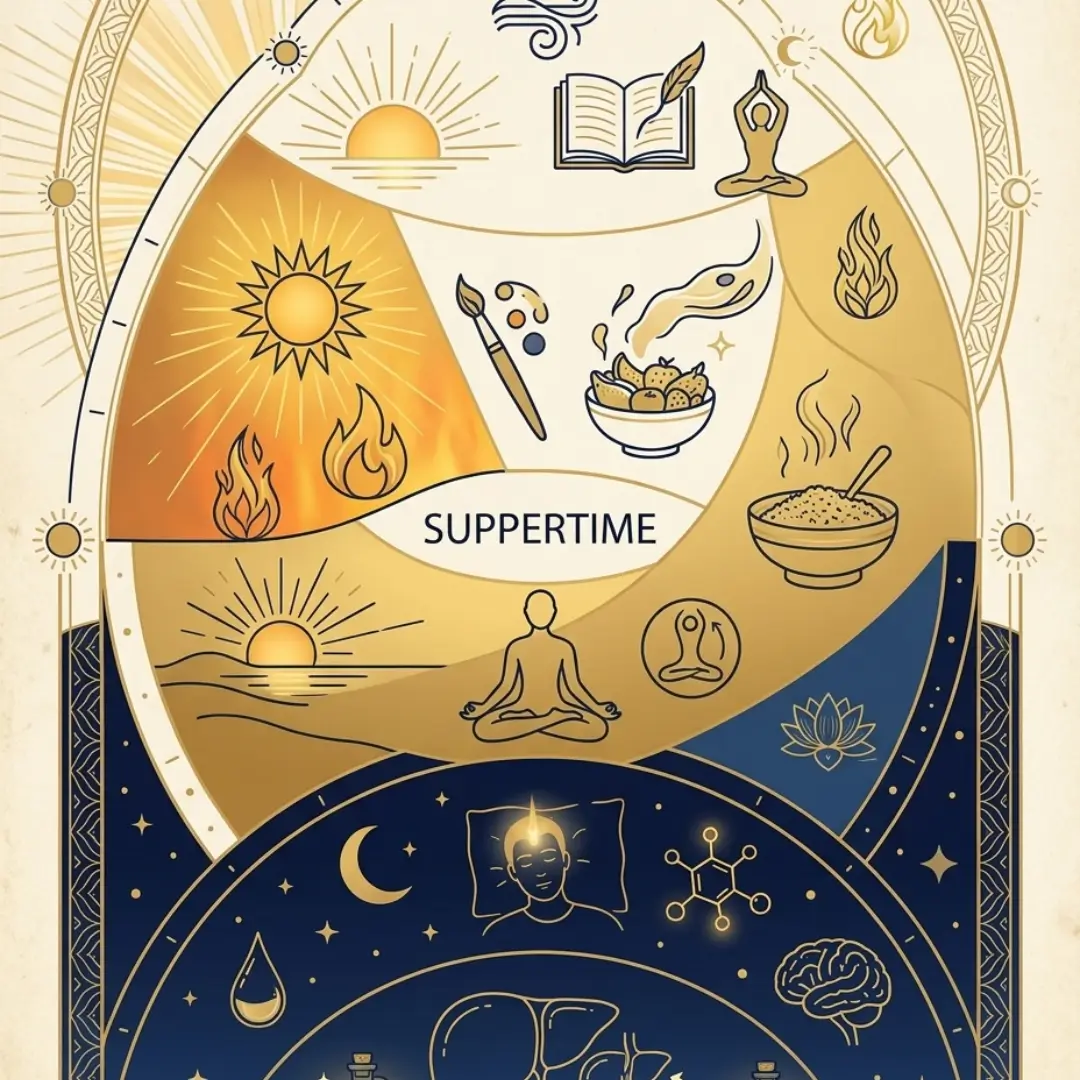
WHAT AYURVEDA TAUGHT: Ayurveda’s dinacharya — the daily schedule, specifies precise windows for waking, eating, elimination, and rest. These windows are not arbitrary. They map to the dominance of each elemental force across the 24-hour cycle: Vata governs 2–6am and 2–6pm, Kapha governs 6–10am and 6–10pm, Pitta governs 10am–2pm and 10pm–2am.
WHAT MODERN SCIENCE CONFIRMED: Chronobiology — now one of the most active fields in medical research — has confirmed that the body’s metabolic, immune, and repair functions follow precise circadian patterns. The 2017 Nobel Prize in Physiology or Medicine was awarded for research on the molecular mechanisms controlling these rhythms. Every window Ayurveda mapped aligns with a phase of the body’s documented circadian activity.
YOUR TYPE: Vata’s 2–4am window corresponds to the body’s deepest neurological repair phase. Disruption here (which Vata types experience as insomnia) is now understood to impair inflammatory cleanup in the brain. Pitta’s 10pm–2am window is the liver’s peak detox phase — Pitta types who stay up past midnight are working against their body’s strongest natural detox window.
WHAT AYURVEDA TAUGHT: Ayurveda specifies that meals should be eaten at consistent times, with the largest meal at midday when digestive fire (agni) is strongest, and nothing after sunset. Eating against the body’s natural rhythm was understood to create ama — undigested metabolic waste — that accumulates as the substrate for chronic disease.
WHAT MODERN SCIENCE CONFIRMED: Chrono-nutrition research now confirms that meal timing is as important as meal composition for metabolic health. Studies show that eating the same number of calories at the wrong times of day produces significantly worse metabolic outcomes than eating at aligned times. Late-night eating specifically elevates inflammatory markers and disrupts insulin sensitivity.
Vata
Vata types who skip meals create the blood sugar instability that drives their nervous system inflammation.
Pitta
Pitta types eating large meals after 8pm are working against their liver’s peak detox window.
Kapha
Kapha types are the most vulnerable to meal timing disruption — their metabolic fire is already lower, and eating late amplifies this.
Pillar 3 — Gut Health
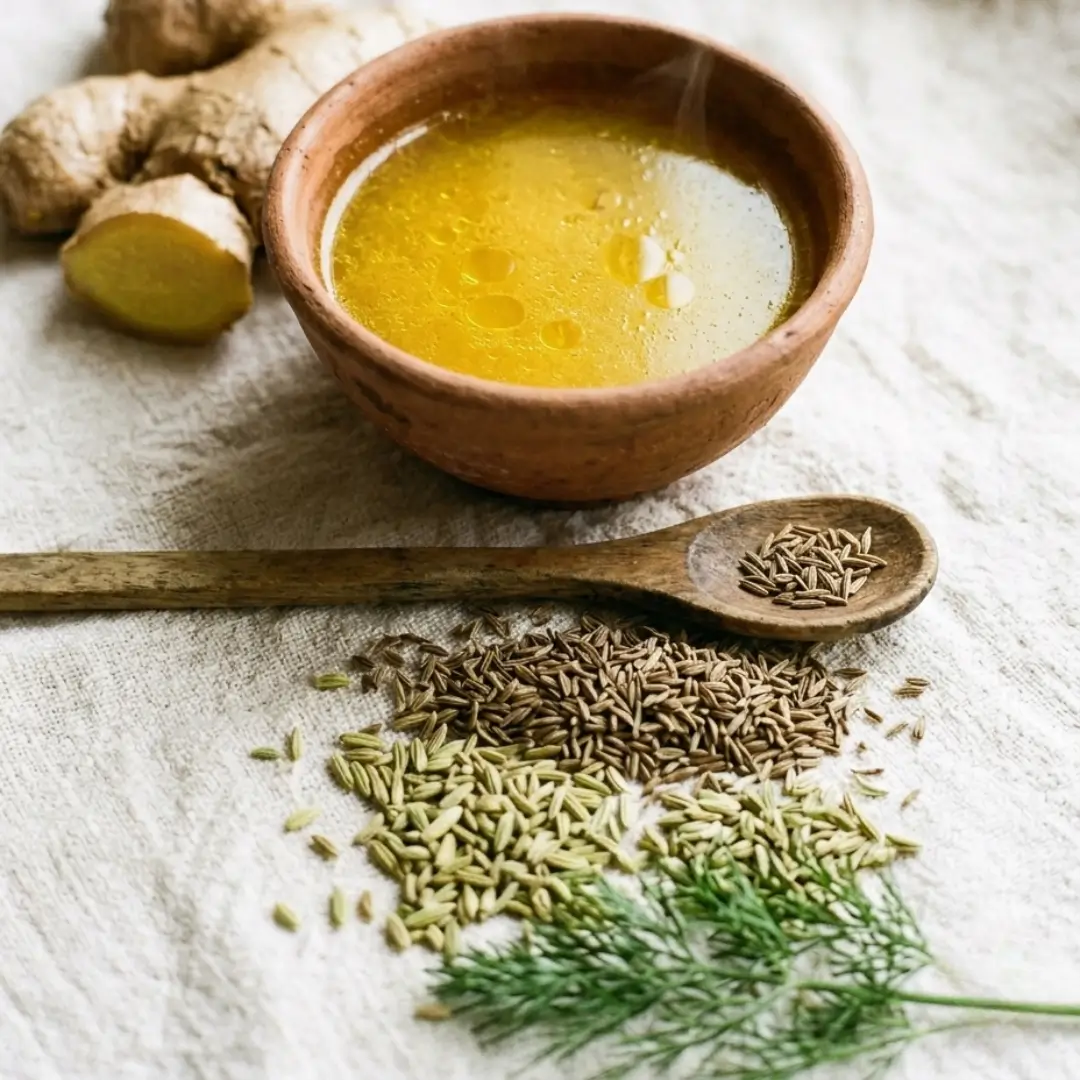
WHAT AYURVEDA TAUGHT: Ayurveda places agni — digestive fire — at the center of all health. A strong agni produces ojas (vitality and immunity). A compromised agni produces ama (toxic accumulation). The gut is not just a digestive organ; it is the root of every system in the body. Emotional health, immune strength, and energy all trace back to the state of digestion.
WHAT MODERN SCIENCE CONFIRMED: The gut-brain-immune axis is now one of the most active areas of medical research. The gut microbiome regulates the immune system, produces 90% of the body’s serotonin, and communicates directly with the brain via the vagus nerve. When the gut lining is compromised — a condition now called intestinal permeability or ‘leaky gut’ — inflammatory molecules enter the bloodstream and trigger systemic inflammation across every organ system.
Vata
Vata’s irregular digestion reflects a dysregulated gut motility — the nervous system and the gut are in constant conversation, and Vata nervous system inflammation directly disrupts gut function.
Pitta
Pitta’s excess acid and reactivity reflect a gut lining under fire.
Kapha
Kapha’s heaviness and sluggishness reflect a microbiome that needs activation, not suppression.
Pillar 4 — Daily Detox Rituals

WHAT AYURVEDA TAUGHT: Ayurveda’s Dinacharya includes practices like oil pulling (kavala), tongue scraping (jihva nirlekhan), self-oil massage (Abhyanga), and nasal cleansing (nasya). These are not cosmetic rituals. Each one is mapped to a specific detox channel in the body: the lymphatic system, the oral microbiome, the skin, the respiratory tract.
WHAT MODERN SCIENCE CONFIRMED: Modern research has validated the mechanism behind each of these practices. Oil pulling has been shown to reduce oral bacteria and systemic inflammatory markers. Dry brushing and Abhyanga stimulate lymphatic flow, which is now understood as the body’s primary waste removal system, including removal of inflammatory debris from the brain via the glymphatic system. Nasal rinsing reduces inflammatory load on the respiratory mucosa.
Vata
Vata types benefit most from Abhyanga — the warm oil grounds the nervous system and activates the lymphatic channels that Vata’s dry, mobile nature tends to deplete.
Pitta
Pitta types benefit most from cooling practices that reduce inflammatory load on the skin and liver.
Kapha
Kapha types benefit most from dry brushing and invigorating practices that move the lymphatic system out of its natural tendency toward stagnation.
Pillar 5 — Mental Inflammation

WHAT AYURVEDA TAUGHT: Ayurveda does not separate mental and physical health. Rajas (agitation) and Tamas (inertia) are understood as mental qualities that directly produce inflammation in the body. Chronic Rajas manifests as Vata and Pitta imbalances. Chronic Tamas manifests as Kapha accumulation. The mind and the body share the same inflammatory substrate.
WHAT MODERN SCIENCE CONFIRMED: The field of psychoneuroimmunology now confirms this completely. Psychological stress elevates pro-inflammatory cytokines (IL-6, TNF-α, CRP) through the HPA axis. Chronic stress leads to glucocorticoid resistance — the body’s anti-inflammatory cortisol response becomes desensitized. Depression, anxiety, and cognitive decline are now understood as inflammatory conditions as much as psychological ones.
Vata
Vata mental inflammation is the hyperactivated, anxious mind. The research maps to HPA axis dysregulation and neuroinflammation.
Pitta
Pitta mental inflammation is the driven, irritable, overheated mind. The research maps to sympathetic nervous system overdrive and liver inflammation.
Kapha
Kapha mental inflammation is the withdrawn, unmotivated, heavy mind. The research maps to chronic low-grade inflammation dampening dopamine signaling.
WHAT AYURVEDA TAUGHT: Pranayama — Ayurvedic breath regulation — and meditation are prescribed not as relaxation tools but as direct interventions on the inflammatory nervous system. Specific breath patterns are mapped to specific elemental imbalances: cooling breath (Sheetali) for Pitta, grounding breath (Nadi Shodhana) for Vata, activating breath (Kapalabhati) for Kapha.
WHAT MODERN SCIENCE CONFIRMED: A 2017 study in PNAS demonstrated that mind-body practices including meditation produced measurable downregulation of inflammatory gene expression, specifically the NF-κB pathway, a master regulator of inflammation. A meta-analysis of 18 studies found that mindfulness-based interventions significantly reduced CRP, IL-6, and TNF-α across diverse populations.
YOUR TYPE: The typed prescription matters. Kapalabhati for a Pitta type — heating breath for an already overheated constitution — is counterproductive. Ayurveda knew this. Modern research is beginning to map the same distinctions.
Pillar 6 — Mindful Medicine Chest
WHAT AYURVEDA TAUGHT: Haridra — turmeric — has been central to Ayurvedic medicine for five thousand years. Used internally and topically, it was understood to clear ama, reduce excess Pitta, support liver function, and protect the gut lining. The dose and preparation were always specific: combined with warming spices, taken with fat, and in precise quantities.
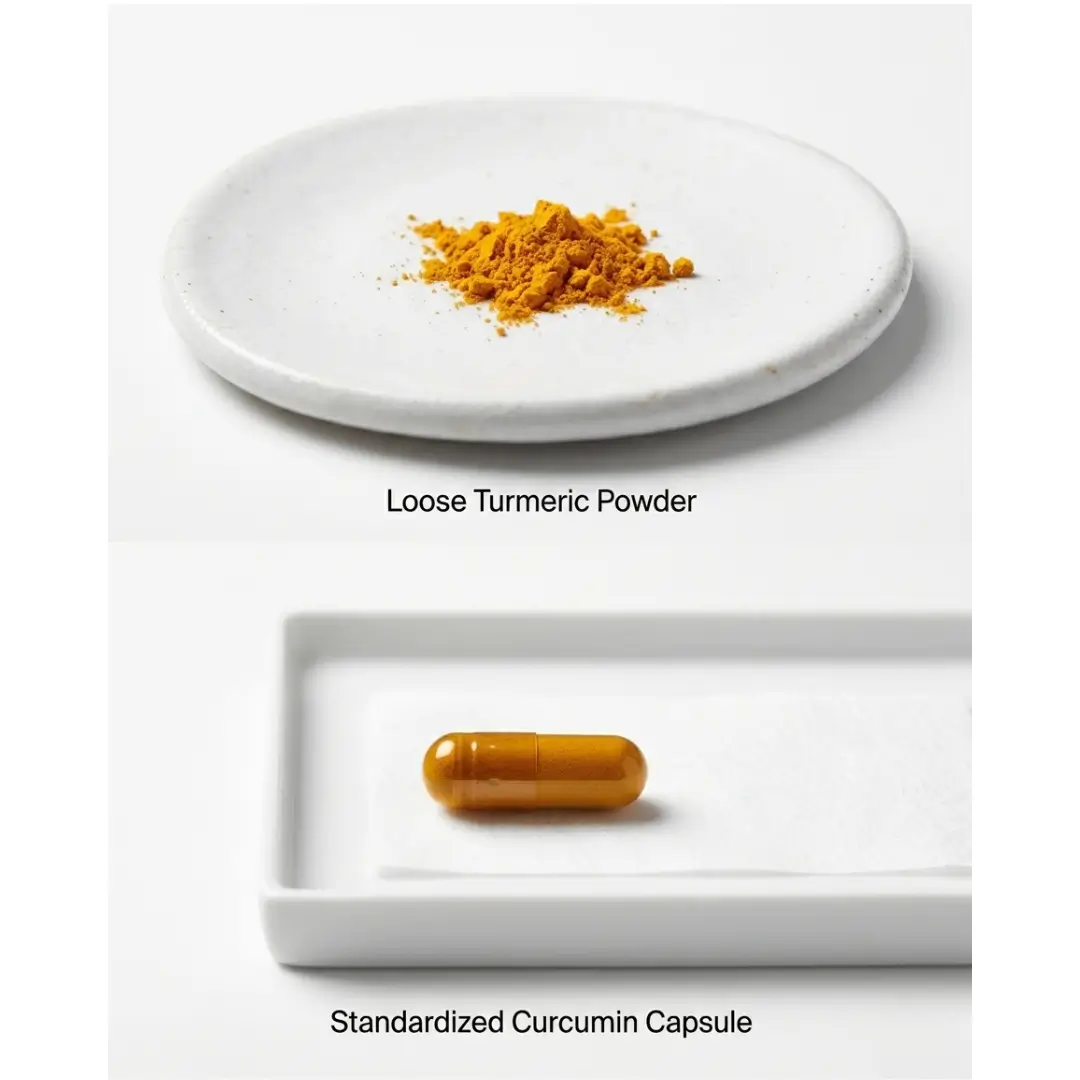
WHAT MODERN SCIENCE CONFIRMED: Curcumin, the primary active compound in turmeric — is now the subject of over 15,000 peer-reviewed studies. It has demonstrated anti-inflammatory, antioxidant, neuroprotective, and anticancer effects. The research confirms what Ayurveda always specified: preparation and bioavailability are everything. Only 3 to 5 percent of turmeric is curcuminoids. Without standardized extraction and bioavailability enhancers, the therapeutic concentration never reaches the bloodstream. Sprinkling turmeric on food and taking 95% standardized curcumin in a clinical formulation are not the same thing.
Vata
Vata types need turmeric in a warm, oily base — the fat enhances absorption and the warmth supports Vata’s depleted digestive fire.
Pitta
Pitta types need cooling carriers, coconut milk base without heating spices like ginger.
Kapha
Kapha types need warming, stimulating preparations — turmeric with black pepper and ginger to activate a sluggish metabolism. The preparation is the medicine.
WHAT AYURVEDA TAUGHT: Ayurveda uses botanical combinations rather than single compounds — recognizing that plants contain multiple active constituents that work synergistically. Ashwagandha (Withania somnifera) addresses stress-driven inflammation. Triphala supports gut motility and detox. Tulsi modulates immune response and reduces cortisol.
WHAT MODERN SCIENCE CONFIRMED: Modern research confirms each mechanism. Ashwagandha’s withanolides have demonstrated significant reduction in cortisol and inflammatory markers in multiple RCTs. Triphala’s combination of three fruits provides prebiotic support, antioxidant activity, and gut motility regulation. Tulsi’s adaptogenic compounds modulate the HPA axis and have demonstrated anti-inflammatory effects comparable to ibuprofen in animal models.
YOUR TYPE: As with turmeric, the research confirms that therapeutic outcomes require standardized extraction and appropriate dosing — not culinary quantities. The Ayurvedic principle was always correct. Modern formulation science is what makes it clinically reliable.
WHAT AYURVEDA TAUGHT: Ayurveda’s core principle is that the body is always moving toward balance. Disease is not an attack from outside — it is the accumulation of obstacles to the body’s natural intelligence. The practitioner’s role is not to fight disease but to identify and remove what is blocking the body’s own healing capacity.
WHAT MODERN SCIENCE CONFIRMED: Systems biology and integrative medicine are increasingly moving toward this same framework. The concept of allostatic load — the cumulative burden of chronic stress and inflammatory input on the body’s regulatory systems — maps directly to Ayurveda’s concept of ama accumulation. The research on lifestyle medicine consistently shows that removing obstacles (poor sleep, inflammatory diet, chronic stress, sedentary behavior) allows the body’s own regulatory mechanisms to restore measurable physiological balance.
YOUR TYPE: For every elemental type, the protocol follows the same logic: identify the specific obstacles your type is most likely to accumulate, and remove them systematically. That is the Elemental Design framework. And it is now, in every meaningful way, the framework modern science is converging on.
The gap between ancient wisdom and modern results
Understanding that Ayurveda is validated by modern science is the first step. The second is understanding why so many people try Ayurvedic practices and see limited results.
The answer is almost always one of two things: wrong form, or wrong dose for their type.
The culinary use of turmeric — golden milk, spiced food, low-dose capsules from a generic health store — does not deliver the curcuminoid concentration that the clinical research demonstrates. The 15,000 studies on curcumin were not conducted on people sprinkling half a teaspoon of turmeric powder into their dinner. They were conducted using standardized extracts at specific doses with specific bioavailability protocols.
The same applies to ashwagandha, triphala, tulsi, and the other botanicals in the Ayurvedic pharmacopoeia. The research is compelling. The results depend entirely on whether the active compounds are present in the right concentration, the right form, and aligned with your elemental type.
If you’re Vata
Vata: Your protocol requires warm, oily carriers, grounding herbs, and nervous system support. Generic formulations miss the Vata-specific delivery requirements. The same botanical in the wrong base works against you.
If you’re Pitta
Pitta: Your protocol requires cooling carriers and liver-supportive herbs. Adding heating spices to turmeric — common in generic golden milk recipes — aggravates your fire instead of cooling it.
If you’re Kapha
Kapha: Your protocol requires stimulating, activating preparations. Low-dose, non-stimulating formulations won’t move Kapha’s naturally slow metabolism. The dose and the activating compounds matter.
What to do with this
The ten principles above are not a reading list. They are a framework for understanding your body at a level that most people never access — because most people are told that this framework isn’t scientific.
It is. It has been for decades. The research exists. And now you have the vocabulary to seek it out and apply it to your own elemental pattern.
Step 1: If you haven’t taken the Elemental Design Quiz, that’s where everything starts. Your type determines which of these ten principles are most urgent for your body right now.
Step 2: Take the Inflammation Code Quiz to identify your current inflammation tier. This gives you a baseline and maps your highest-priority pillars.
Step 3: Join Dr. Shivani’s weekly email. Each Tuesday: one pillar taught through your elemental lens. Each Sunday: one typed action. The protocol builds week by week.
Ayurveda was always the original. The science caught up. Now it’s your turn.